How to Check Windows for Drafts (Simple DIY Tests)
Updated March 2026 • 5 min read • Windows
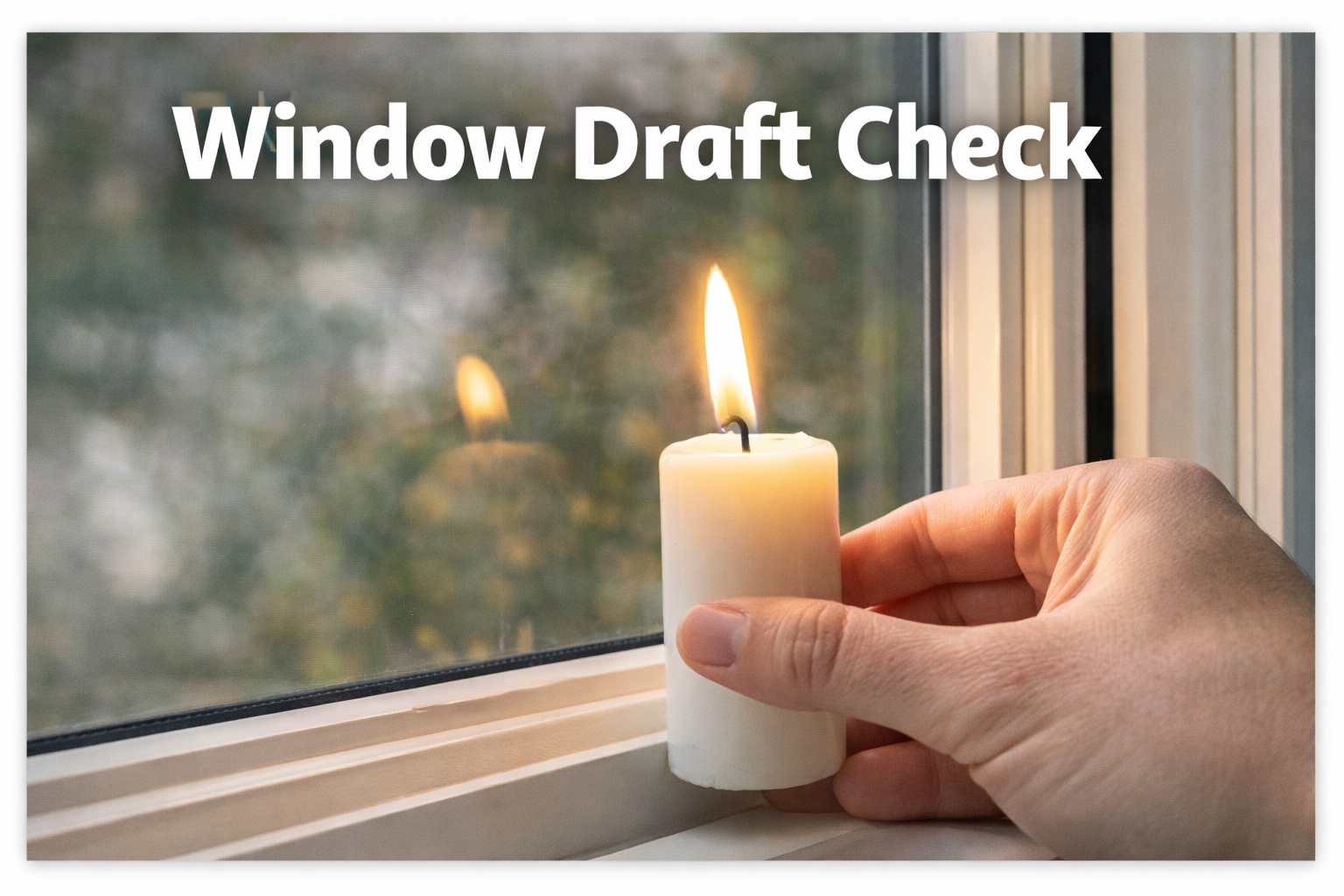
Drafty windows can make your home uncomfortable and increase heating and cooling costs. These quick DIY tests help you find air leaks and decide whether a simple seal fix is enough — or if it’s time to upgrade.
1) The Candle Test
On a windy day, hold a candle (or incense) near the window edges. If the flame flickers or smoke shifts, air is leaking. Be careful and keep flame away from curtains.
2) The Hand Test
Slowly move your hand along the frame and sash edges. If you feel cold air, there may be a gap in weatherstripping or caulk.
3) Inspect Caulking Outside
Cracked or missing caulk allows air and water into the wall system. Re-caulking can often eliminate drafts and prevent moisture damage.
4) Check Locks and Window Alignment
If the window doesn’t lock properly, it may not compress the seals. Sometimes a small adjustment helps the window seal tight again.
5) Look for Condensation Between Panes
Fog or moisture between glass panes often means the seal has failed. That reduces energy efficiency and usually requires window replacement.
Thinking About New Windows?
Use our estimator for a fast pricing range based on home size and window count.
Window EstimateFrequently Asked Questions
Do drafts always mean I need new windows?
Not always. Many drafts can be fixed with caulk and weatherstripping. Seal failure between panes is more likely to require replacement.
When is the best time to check for drafts?
Fall and winter are ideal because temperature differences make drafts easier to detect.
What’s the easiest quick fix?
Replacing worn weatherstripping and re-caulking exterior gaps often provides the fastest improvement.
Elite Home Remodeling helps homeowners improve comfort and energy efficiency with professional window replacement and exterior upgrades.