Signs Your Home Needs Roofing, Siding, or Window Upgrades
Updated May 2026 • 6 min read • Exterior Remodeling
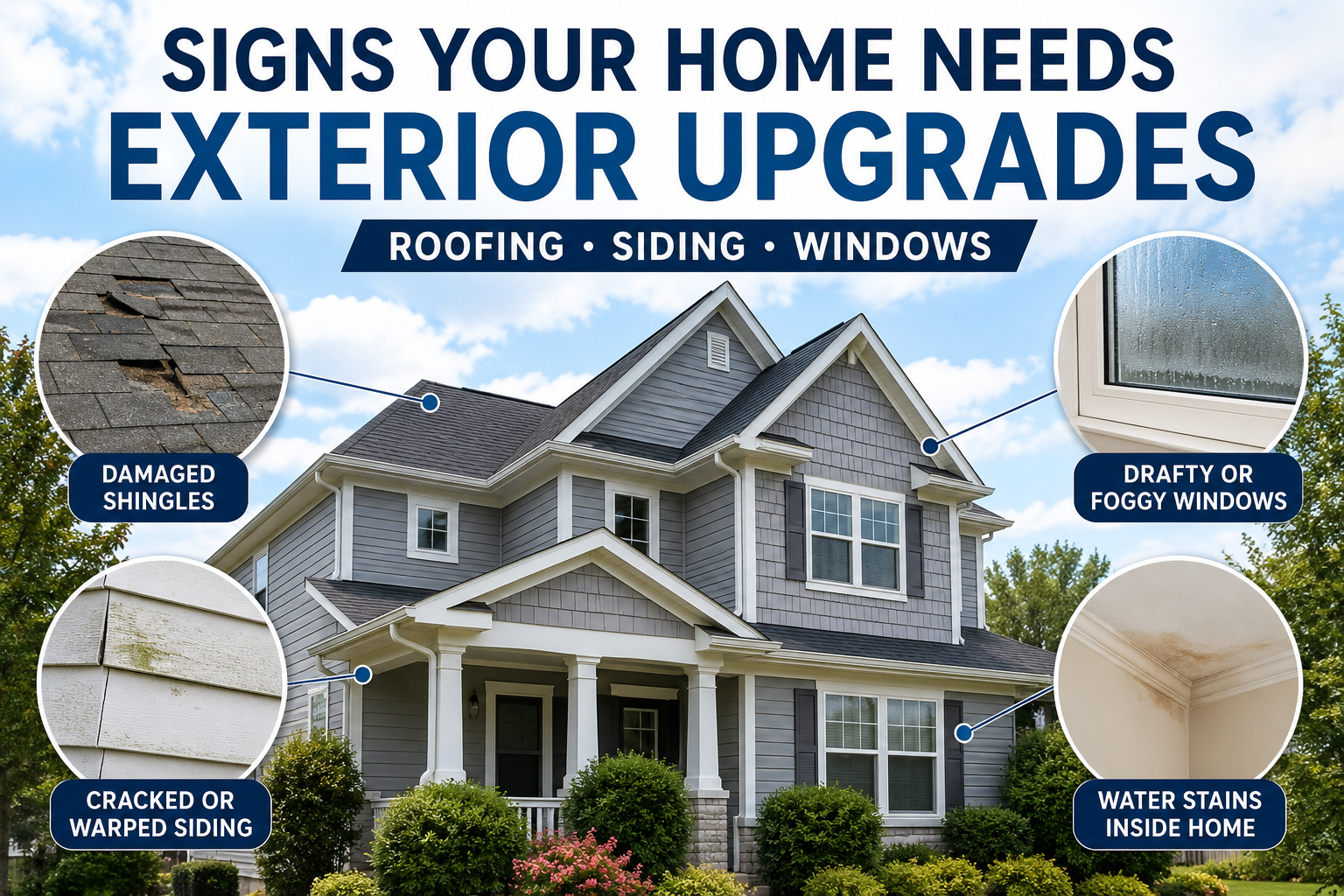
Your home usually gives you warning signs before a small exterior issue becomes a major repair. Knowing what to look for can help you catch roof, siding, and window problems early.
1) Your Roof Has Missing, Curling, or Damaged Shingles
Missing shingles, curled edges, dark streaks, exposed nail heads, and heavy granule loss are common signs that your roof may need attention. If the damage is limited to one area, a repair may be enough. If the roof has widespread wear, replacement may be the better long-term option.
2) You Notice Water Stains Inside the Home
Brown stains on ceilings, bubbling paint, damp insulation, or musty odors in the attic can point to a leak. The source may be the roof, flashing, gutters, siding, or window trim. Even a small leak should be checked quickly because water damage can spread behind walls and ceilings.
3) Your Siding Is Cracked, Loose, Warped, or Faded
Siding does more than improve curb appeal — it helps protect your home from weather. Cracked panels, loose siding, soft spots, mold, or warping can allow moisture behind the exterior surface. If you are constantly repairing the same areas, it may be time to consider siding replacement.
4) Your Windows Feel Drafty or Hard to Open
Drafts, condensation between glass panes, rotted frames, broken locks, or windows that are difficult to open are signs your windows may no longer be performing well. Older windows can also make rooms feel colder in the winter and hotter in the summer.
5) Your Energy Bills Keep Going Up
Old windows, air leaks, poor insulation, damaged siding, and roof ventilation problems can all make your heating and cooling system work harder. If your home feels uncomfortable even when the HVAC system is running, the exterior envelope of the home may need attention.
6) You See Rot, Mold, or Soft Wood Around Trim
Soft wood around windows, fascia, soffits, or door trim can be a sign that moisture is getting into places it should not. Small trim repairs are common, but widespread rot may mean there is a larger exterior problem.
7) Your Home Looks Tired From the Street
Faded siding, old windows, stained roofing, and damaged trim can make the entire home look older. Exterior upgrades can improve curb appeal, protect the home, and make maintenance easier.
Not Sure What Needs Attention First?
Start with the area showing the clearest signs of damage. If you see leaks or missing shingles, begin with the roof. If you see drafts or condensation, check the windows. If you see cracks, warping, or moisture behind panels, inspect the siding.
Frequently Asked Questions
How do I know if I need roof repair or roof replacement?
If the problem is isolated, such as a few missing shingles or a small flashing issue, repair may be enough. If the roof is older, leaking in multiple areas, or showing widespread shingle damage, replacement may be more practical.
What are the biggest signs that siding needs replacement?
Cracks, loose panels, warping, soft spots, moisture damage, mold, fading, and repeated repairs are common signs that siding may need replacement.
When should windows be replaced?
Windows may need replacement if they are drafty, difficult to open, fogging between glass panes, leaking, rotting around the frame, or no longer locking properly.
Should I upgrade the roof, siding, or windows first?
Start with the issue that affects protection the most. Active leaks, missing shingles, or water damage should usually be handled before cosmetic upgrades. After that, prioritize based on comfort, energy efficiency, and curb appeal.
Can exterior upgrades improve home value?
Roofing, siding, and window upgrades can improve curb appeal, comfort, and buyer confidence. The exact value depends on the home, materials, condition, and local market.
Elite Home Remodeling helps homeowners identify exterior problems early and choose the right solution for roofing, siding, and window upgrades.