Storm Damage Checklist: What to Check on Your Roof, Siding and Windows
Updated July 2026 • 8 min read • Storm Damage
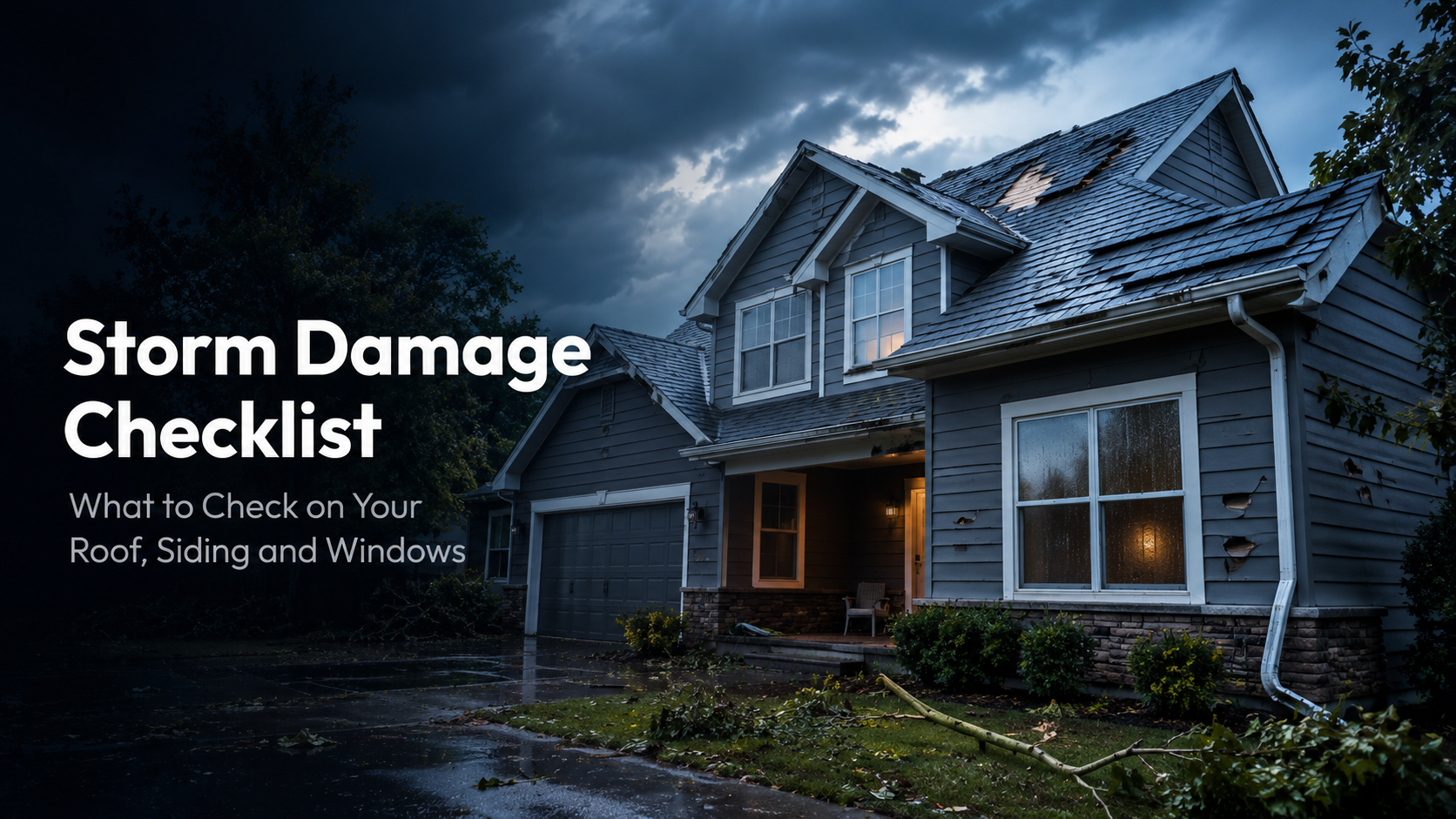
Strong winds, hail, heavy rain, and falling branches can damage several parts of your home at the same time. Use this checklist to inspect your exterior safely, document possible damage, and decide when a professional inspection is needed.
Safety Comes First
Do not climb onto a wet or damaged roof. Stay away from downed electrical lines, broken glass, unstable trees, loose siding, and hanging gutters. If you smell gas, see sparks, or notice structural movement, leave the area and contact the appropriate emergency service.
1) Photograph the Home Before Moving Anything
When conditions are safe, take pictures and video before cleaning up debris or making temporary repairs. Start with wide photos of each side of the home, then take close-up pictures of visible damage.
Document the following areas:
- Front, rear, and both sides of the home
- Visible roof surfaces
- Siding, corners, soffit, and fascia
- Windows, screens, trim, and exterior capping
- Gutters and downspouts
- Fallen branches and damaged landscaping near the home
- Ceiling stains, wet walls, or damaged interior finishes
Save the date and approximate time of the storm. Keep copies of receipts for temporary protection, cleanup, or emergency repairs.
2) Inspect the Roof From the Ground
Walk around the home and inspect the roof using binoculars or your phone camera zoom. Look from several angles because damage may be visible on only one roof slope.
Common roof warning signs include:
- Missing shingles or exposed roof sections
- Lifted, curled, cracked, or displaced shingles
- Shingle pieces in the yard
- Loose or bent flashing around chimneys and roof penetrations
- Dented metal vents, flashing, or gutters
- Fallen branches resting on the roof
- Areas that appear uneven, sunken, or sagging
- Large amounts of shingle granules near downspouts
Roof damage is not always visible from the ground. If nearby homes lost shingles or your property received heavy hail or wind, a professional inspection may still be appropriate.
Important
Never walk beneath a damaged roof edge, hanging gutter, loose branch, or material that could fall. Keep children and pets away from the affected area.
3) Check Siding for Cracks, Holes and Loose Panels
Wind and hail can crack, puncture, loosen, or completely remove siding. Even small openings can allow wind-driven rain to reach the wall system behind the siding.
Look for:
- Cracked, chipped, or punctured siding panels
- Loose panels that move or rattle in the wind
- Sections that are missing or pulled away from the wall
- Buckled, warped, or uneven siding
- New stains or water marks beneath damaged areas
- Open seams around corners, windows, and doors
- Pieces of siding found in the yard
Pay special attention to the side of the house that faced the strongest wind. Hail damage may appear as chips, dents, small holes, or circular impact marks.
4) Inspect Soffit, Fascia and Exterior Trim
Soffit and fascia protect the roof edge and help keep water, pests, and debris out of the attic and wall systems. These components can loosen during strong wind even when the main siding appears undamaged.
Check for:
- Missing or hanging soffit panels
- Bent or separated fascia
- Loose aluminum capping
- Open gaps along the roof edge
- Cracked trim around windows and doors
- Exposed wood or sheathing
- Water marks below the roof edge
Loose soffit or fascia should be addressed quickly because additional wind can pull more material away from the home.
5) Inspect Windows, Screens and Exterior Capping
Windows can be damaged by hail, flying debris, wind pressure, and water entering around the frame. Inspect each window from inside and outside when it is safe.
Look for:
- Cracked or broken glass
- Torn or punctured screens
- Dented frames or exterior capping
- Loose trim or cracked caulk
- Water on the sill or around the frame
- Windows that no longer open, close, or lock properly
- Fog or moisture appearing between glass panes
Do not handle broken glass without proper protection. Keep people away from the area and cover the opening from inside only when it can be done safely.
6) Check Gutters and Downspouts
Gutters may be bent, loosened, clogged, or pulled away from the fascia during a storm. Damaged drainage systems can direct water toward the roof edge, siding, foundation, or basement.
Inspect for:
- Sections pulling away from the house
- Bent, crushed, or separated gutters
- Loose or missing downspouts
- Water overflowing in unusual locations
- Disconnected downspout extensions
- Heavy debris blocking drainage
- Dents that may indicate hail impact
- Large amounts of roofing granules near downspout exits
Avoid reaching into gutters when you cannot see what is inside. Storm debris may contain sharp metal, broken glass, nails, or branches.
7) Look Inside the Attic and Upper Rooms
Exterior damage can allow water into the home before a ceiling leak becomes obvious. Check the attic and rooms below the roof after the storm and again after the next rainfall.
Watch for:
- Wet or compressed insulation
- Dark stains on roof decking or rafters
- Water dripping around vents or chimneys
- Daylight visible through the roof
- New ceiling or wall stains
- Bubbling or peeling paint
- Damp carpet or flooring
- Musty odors
Do not touch wet electrical fixtures, wiring, outlets, or ceiling fans. Turn off power only when it can be done safely and contact a qualified professional when electrical components may have been exposed to water.
8) Prevent Additional Interior Damage Safely
Temporary steps may help limit interior damage while you arrange an inspection. Only complete actions that can be performed safely from inside the home or from ground level.
- Move furniture and valuables away from active leaks
- Use containers to collect dripping water
- Dry small wet areas when no electrical hazard is present
- Keep people away from sagging ceilings
- Cover a broken window opening from inside when safe
- Save damaged materials when they may be needed for documentation
Avoid climbing onto the roof, installing a tarp during unsafe conditions, removing attached building materials, or completing permanent repairs before the damage has been properly evaluated.
9) Know When the Inspection Is Urgent
Request professional assistance promptly when you notice:
- An active roof or window leak
- A sagging ceiling or roof area
- Missing shingles or exposed roof decking
- A branch resting on or through the roof
- Broken windows or damaged exterior frames
- Large sections of loose or missing siding
- Hanging gutters, fascia, or soffit
- Wet attic insulation
- Water near electrical fixtures
- Visible structural movement or cracking
Small exterior openings can become larger during the next storm, so it is better to have uncertain damage evaluated before additional wind or rain arrives.
Need a Price Range for Exterior Repairs?
Use our online estimators to get a starting price range for roofing, siding, or replacement windows. A site inspection is still required to confirm storm damage and prepare an exact written proposal.
Storm Damage Documentation Checklist
Keep the following information together in one folder so it is easy to reference during inspections, estimates, and conversations with your insurance provider:
- Date and approximate time of the storm
- Wide photos of the entire property
- Close-up photos of each damaged area
- Interior photos showing water intrusion
- Video showing active leaks or loose materials
- Notes describing when each issue was discovered
- Receipts for emergency protection or cleanup
- Copies of inspection reports and written estimates
- Records of relevant calls, emails, and claim information
Insurance policies and coverage requirements vary. Contact your insurance provider directly for guidance about your policy, documentation requirements, deadlines, deductibles, and coverage.
Frequently Asked Questions
Should I climb onto my roof after a storm?
No. A storm-damaged roof may be wet, slippery, loose, or structurally unsafe. Inspect it from the ground using binoculars or your phone camera. Contact a professional when a closer inspection is needed.
What are the most common signs of roof storm damage?
Common warning signs include missing or lifted shingles, exposed roof areas, damaged flashing, shingle pieces on the ground, excessive granules near downspouts, fallen branches, ceiling stains, and attic moisture.
Can siding damage allow water into the house?
Yes. Cracked, punctured, loose, or missing siding can expose the protective layers and sheathing behind it. Water may enter behind the siding even when the visible opening appears small.
Should I document storm damage before cleaning up?
Yes. When conditions are safe, take wide and close-up photographs before moving damaged materials or completing temporary repairs. Keep notes and receipts related to the damage.
Does every damaged roof need to be replaced?
No. Some storm damage can be repaired when it is limited to a small area and the remaining roof is in good condition. Extensive damage, repeated leaks, or an aging roof may make replacement the better long-term option.
When should I request a professional storm damage inspection?
Request an inspection promptly when you see active leaks, missing shingles, damaged flashing, broken windows, loose siding, damaged soffit or fascia, fallen branches, wet attic insulation, or sagging areas.
Related Homeowner Guides
Roof Maintenance Tips
Learn how to inspect your roof and identify early warning signs before they become major problems.
Read Roof Maintenance Tips →Siding Maintenance
Check your siding for loose panels, moisture damage, cracked caulk, and other common problems.
Read Siding Maintenance Tips →Exterior Upgrade Signs
Learn which roofing, siding, and window warning signs may indicate that repairs or replacement are needed.
Read Exterior Upgrade Signs →Elite Home Remodeling provides roofing, siding, window, soffit, fascia, gutter, and exterior remodeling services throughout Bucks County, Northeast Philadelphia, and surrounding communities. We help homeowners understand the condition of their exterior and provide clear repair or replacement recommendations.